
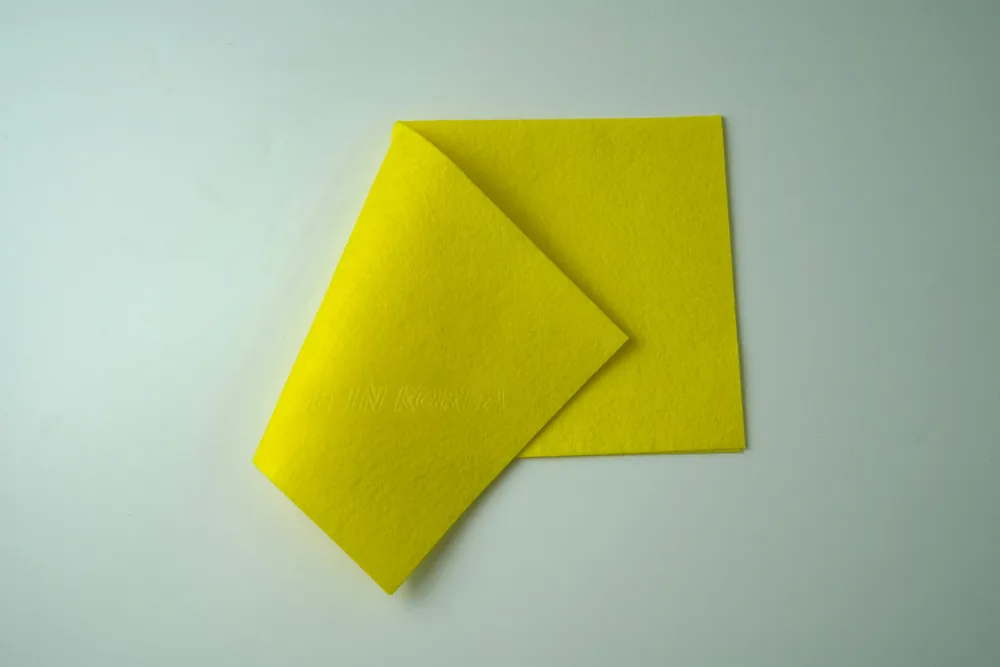
YellowStock colour
It suits any kitchen and is designed for daily use. Because it can be washed and reused many times, it is both practical and easy on the environment.
Low-denier rayon takes up water quickly and dries well. This is not a throwaway wipe — it is built to survive repeated washing.
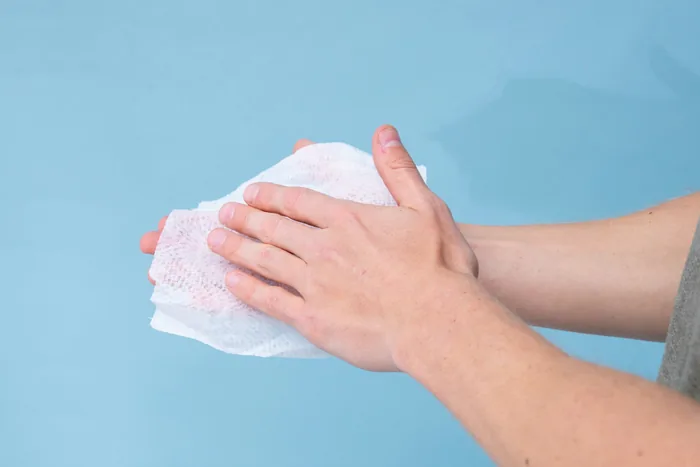
Because it is a nonwoven, the cut edge does not fray and it leaves no lint behind. On glass and stainless steel, where marks show, the difference is obvious.
We developed the dishcloth in 1994, began exporting to Japan in 1996 and to Australia in 2002, and installed the largest dishcloth line in Korea in 2019. Thirty years of refining the same product.
01 Features
From 3M to Daiso, buyers with very different standards have kept ordering the same product.
Fine fibres packed close together take up water quickly. One pass and the surface is dry.
Made to be washed and used again — unlike the single-use nonwoven wipes it competes with.
A nonwoven does not fray at the cut edge, so nothing is left behind on the surface.
A regenerated fibre drawn from wood pulp — lighter on the environment over a long service life.
02 Material
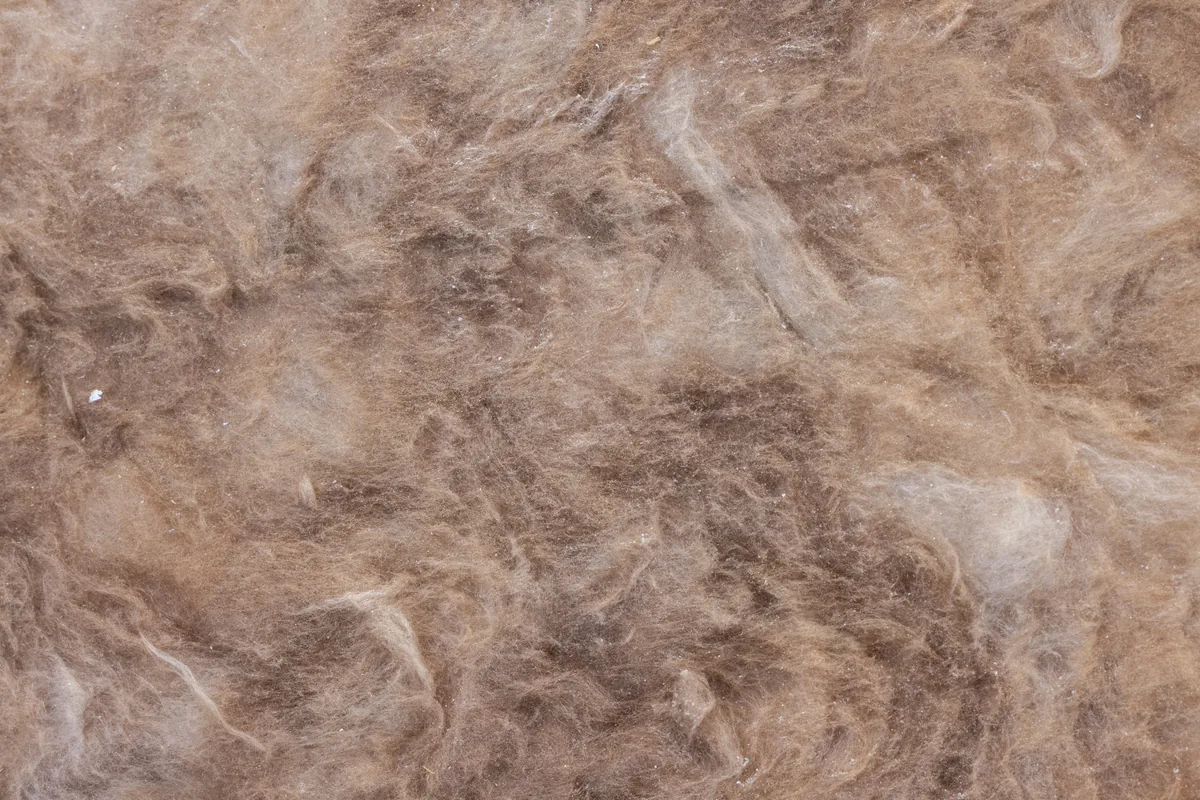
Denier measures the thickness of a fibre. Low denier means a finer filament, so at the same weight there are far more of them.
More filaments means more surface area to hold water, and fine enough strands to reach into the gaps and lift grease and water marks together.
This is the one material Shindo Felt has worked on since 1978.
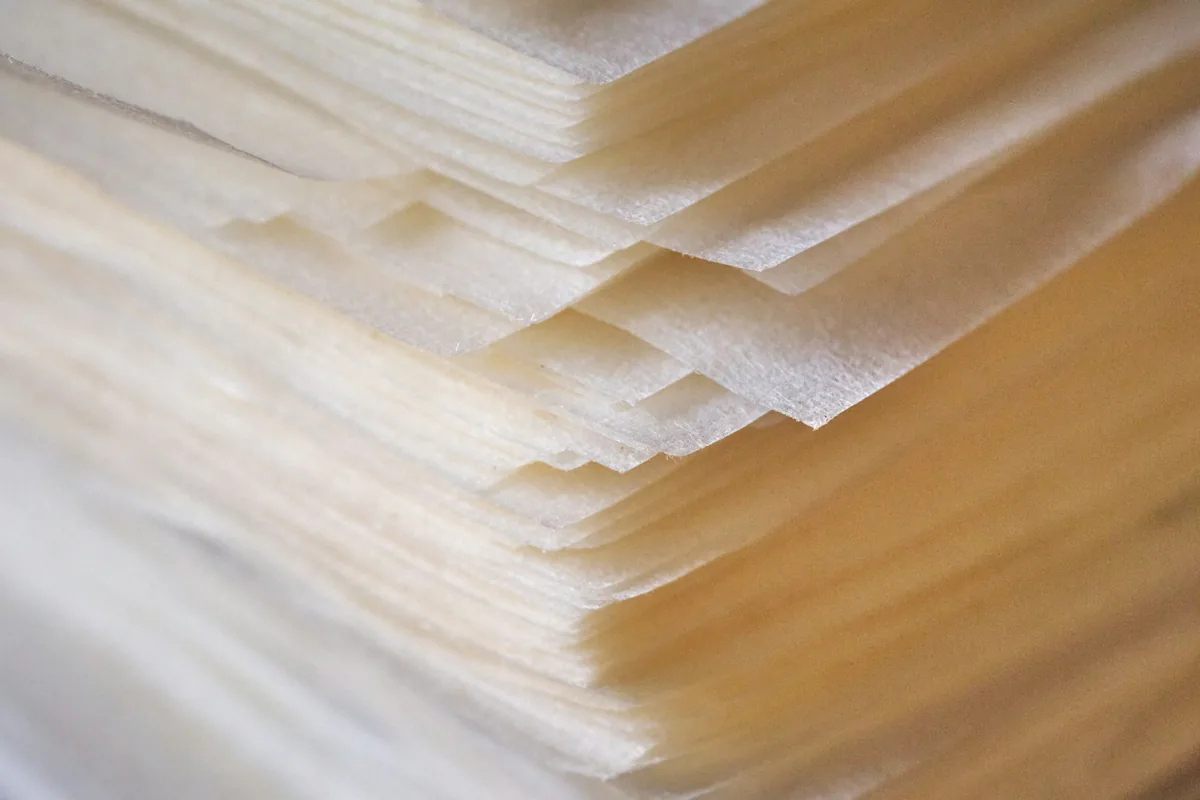
Unlike a woven fabric made from warp and weft, a nonwoven is built by laying fibres in layers and bonding them into a sheet.
With no weave, the cut edge cannot unravel, and thickness and density can be tuned to your specification. That is why 110 g/m² and 120 g/m² run as separate products in the same size.
03 Colours
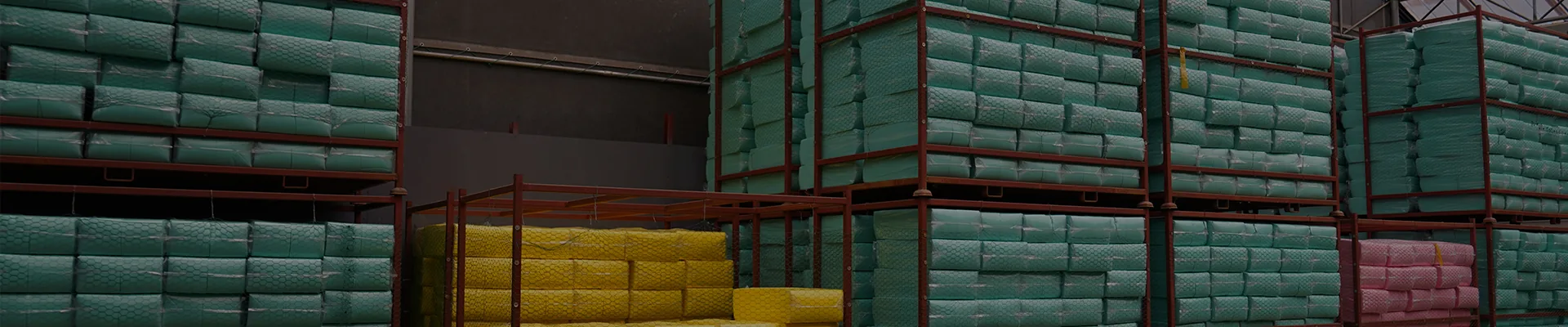
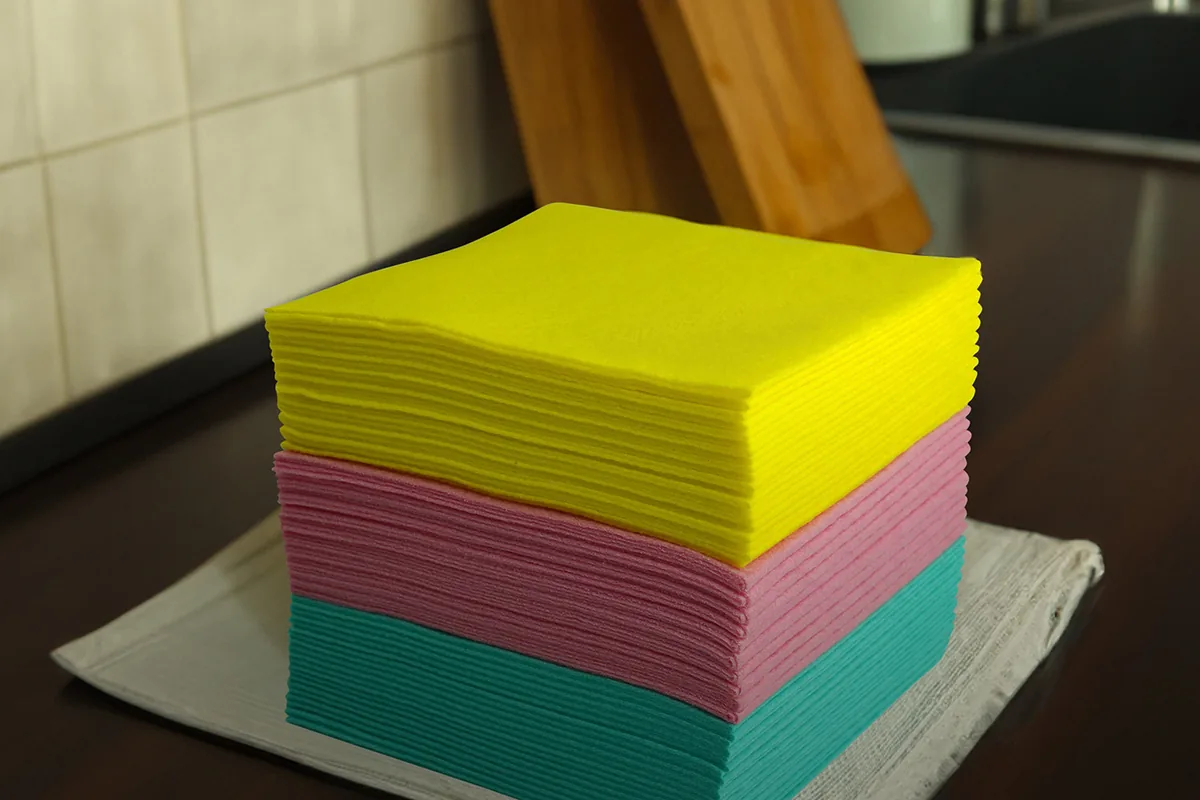
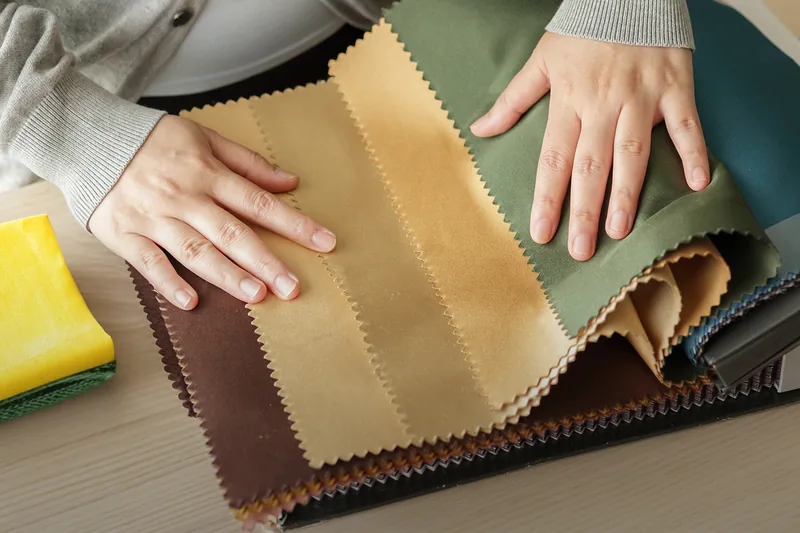
Three colours run continuously. Colour-coding cloths by task helps reduce cross-contamination, which is why food service buyers ask for it.
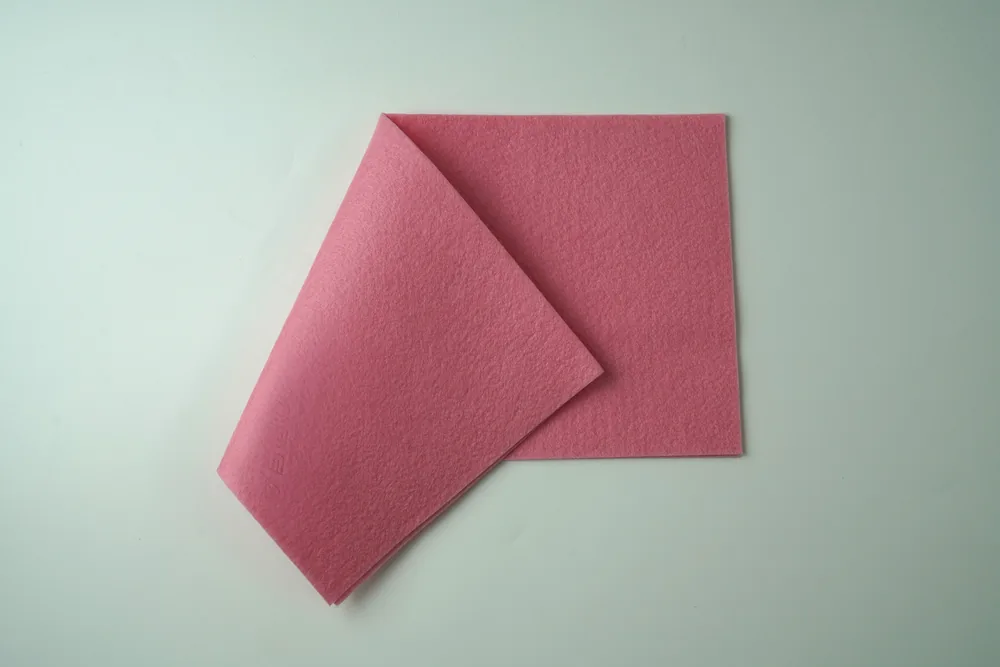
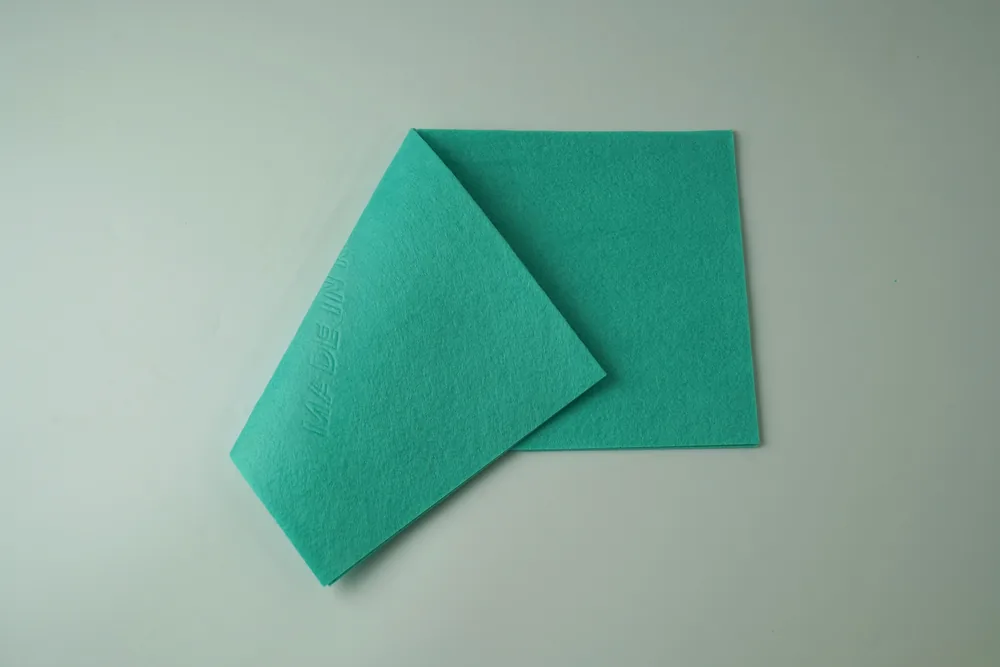
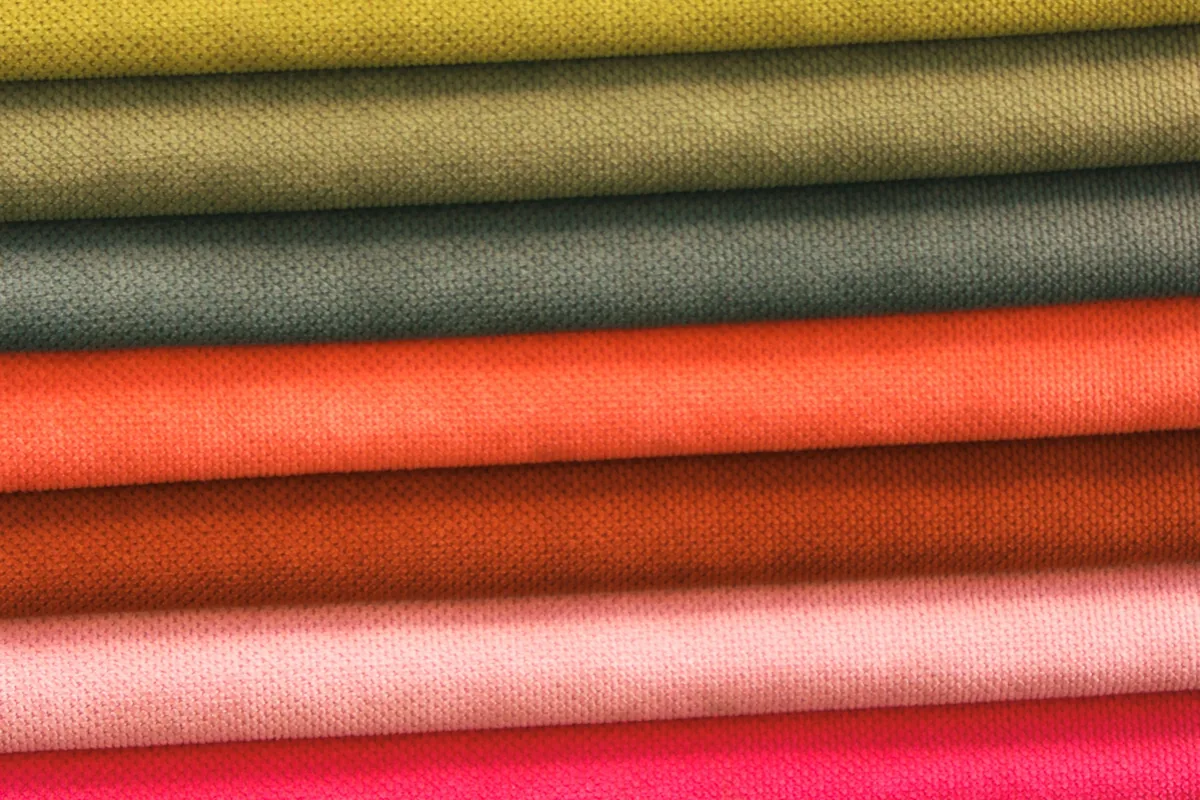
Producing private-label volume for retailers has meant matching brand colours for many years.
Send us a swatch of the colour you need and we will come back with the minimum order quantity.
Ask about colours04 Specification
These items run continuously. Other sizes are made to order.
| Item | Weight | Size | Colour |
|---|---|---|---|
| 905bn2c | 120 g/m² | 38 × 40 cm | Yellow · Pink · Mint |
| 907bn2c | 110 g/m² | 38 × 40 cm | Yellow · Pink · Mint |
| 910bn2c | 110 g/m² | 38 × 38 cm | Yellow · Pink · Mint |
* Material: rayon, synthetic fibre | Please ask about packaging options and minimum order quantity.
05 Usage
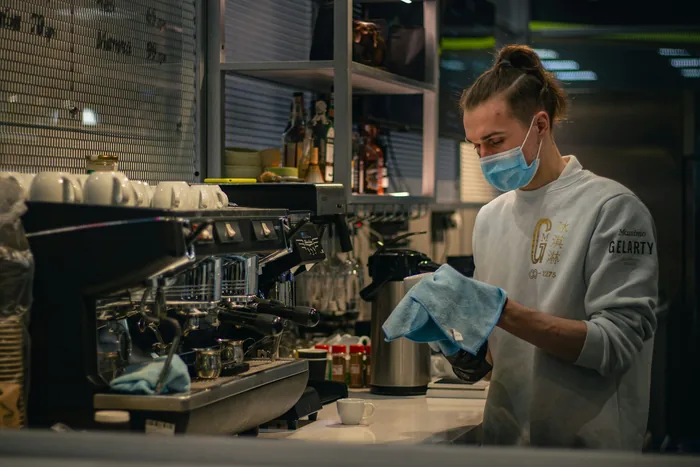
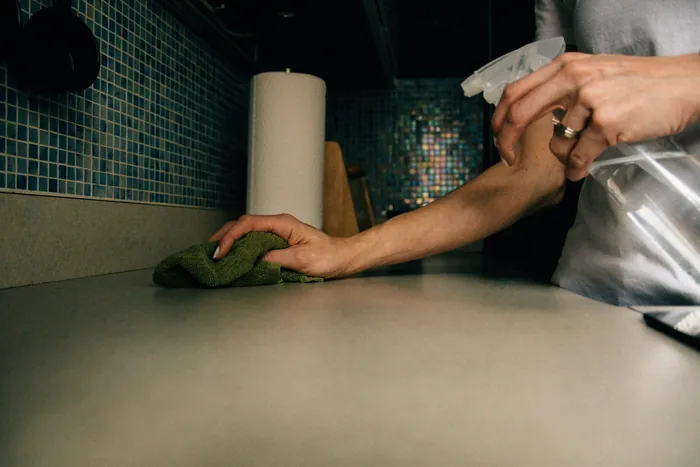
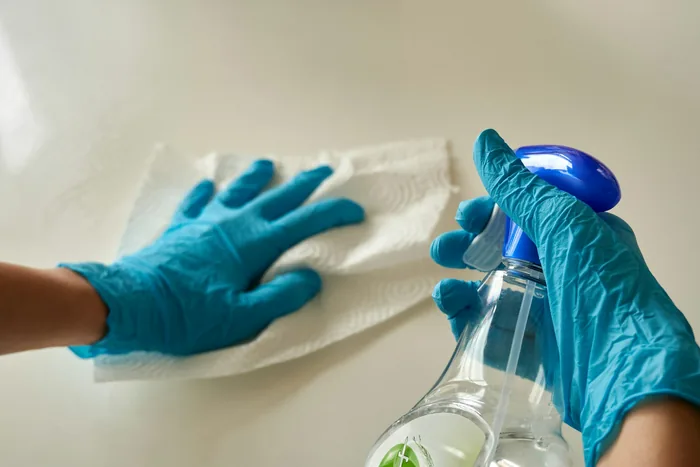
Home kitchens, café and restaurant kitchens, and front-of-house equipment. Anywhere water and grease have to be handled together.
Tell us the quantity and specification you need and we will get back to you.